NEJM
Perspective
|
Charles A. Schiffer, M.D.
Acute myeloid leukemia (AML) is a malignant disease resulting from acquired mutations that block the differentiation of primitive hematopoietic cells and thereby cause immature myeloid precursors to accumulate. The leukemia cells not only have a proliferative advantage, but also suppress the growth and maturation of normal blood cells, resulting in anemia, neutropenia, and thrombocytopenia. AML occurs in patients of all ages, and approximately 35 to 40 percent of younger patients can be cured with intensive chemotherapy. The results are much worse in patients who are older than 60 years of age: only 5 to 10 percent of such patients are long-term survivors. Moreover, the incidence of AML and an overlapping disorder, myelodysplasia, is highest among older people and may be increasing.
The use of new anthracycline agents, modulators of multidrug-resistance proteins, high-dose cytarabine to increase the intensity of induction therapy, and autologous or allogeneic stem-cell transplantation soon after the induction of a first remission has failed to improve the outcome in any substantial way in randomized trials. Many trials have also evaluated the ability of myeloid colony-stimulating factors (granulocyte colony-stimulating factor [G-CSF] and granulocyte�macrophage colony-stimulating factor [GM-CSF]), given after the completion of chemotherapy, to shorten the duration of neutropenia and reduce the incidence and severity of infections. Although these growth factors reduce the duration of neutropenia by a few days, they have no effect on the rates of remission, overall survival, or the costs of treatment.
More intriguing is the use of growth factors to stimulate leukemia cells to proliferate, which could in principle increase their susceptibility to cell-cycle�specific agents such as cytarabine (see Figure). On the basis of considerable preclinical data, L�wenberg and colleagues (pages 743�752) conducted a randomized trial in which patients 18 to 60 years of age who had AML received G-CSF before and during their first two courses of chemotherapy. The authors report a lower relapse rate in the G-CSF�treated group than in the control group but no improvement in the rate of a complete response or overall survival. Subgroup analysis suggested that the major, if not the entire, benefit accrued to patients with standard-risk AML identified on the basis of chromosomal changes. Randomized studies of similar design, including one by the same group, have failed to show a benefit of priming with GM-CSF in older patients with AML or those with a first relapse.
|
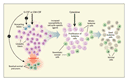
AML is a heterogeneous disease with a wide range of outcomes, which are best predicted by the chromosomal findings at the time of diagnosis. Recent molecular evaluations have further increased the potpourri of subgroupings. The standard-risk category is perhaps the most fragmented of the prognostic subgroups, with the added conundrum that different clinical trials have used different definitions of standard-risk AML. Indeed, even within a given patient, there is marked biologic heterogeneity among the leukemic blasts. For example, it seems that only a small fraction (perhaps less than 1 percent) of the visible blasts can initiate long-term growth in vitro or in immunodeficient mice. These clonogenic cells seem to be the most immature of the blasts, as defined by their surface antigens. Recent studies have also suggested that they are relatively quiescent cytokinetically (i.e., they are not dividing), and there is also likely to be amplification of drug-resistance pathways in such cells.
It is likely that the failure to kill these leukemia stem cells is the cause of resistance to treatment or relapse in many patients. The idea that G-CSF or GM-CSF might arouse these cells and thereby induce them to differentiate or increase the effectiveness of chemotherapy is appealing but difficult to study in vitro, given the low number of such cells. If the behavior of this small subpopulation is critical to the outcome of treatment, then assays that measure the characteristics of the entire population of leukemia cells may provide insufficient or misleading information, whereas research focused on the clonogenic cells, including gene-expression studies, might be more fruitful.
The use of priming with growth factors has aroused concern that the stimulation of residual normal precursors could increase their sensitivity to chemotherapy, with consequent delays in the return of blood counts to normal. This has not occurred in the trials conducted to date, which opens the question of the nature of the protective mechanisms that allow normal stem cells to regenerate rapidly when the leukemia clone is suppressed. How the leukemia clone quashes normal precursors is not understood, but further study of this enigma might elucidate strategies to protect against myelosuppression. The rapid suppression of the Philadelphia-positive clone by imatinib mesylate in patients with chronic myeloid leukemia, with a concomitant return of normal hematopoiesis, might represent a useful model with which to address these questions.
As suggested by L�wenberg et al., additional studies seem warranted before priming with growth factors (G-CSF or others) in younger patients with standard-risk AML becomes standard care. In particular, it would be important to identify more specifically which patients may (or may not) benefit from such an approach. There are no shortages of new, intriguing therapies to be evaluated in AML, including new drug-resistance modulators, Flt-3 inhibitors, antiangiogenesis agents, farnesyl transferase inhibitors, and DNA-demethylating agents. There is, however, a relative shortage of patients, particularly in the United States, where only a small fraction are enrolled in clinical trials.
L�wenberg et al. evaluated 640 patients who were enrolled over a period of almost four years, and their results are being published four years later, because of an appropriate interest in the long-term outcome. How can priorities be scientifically sorted out so that the best of these various contenders for the treatment of AML can be identified more efficiently? Complicating this question is the reality that most new drugs are controlled by pharmaceutical companies, which have their own mechanisms and motivations for wanting to jump the queue, particularly when many similar compounds are competing to be the first one approved in its class. There is no orderly mechanism for fostering and coordinating cooperation among the different leukemia-research groups worldwide, and the multiple administrative impediments to initiating clinical trials and enrolling patients from the private-practice setting are well known. The study by L�wenberg et al. notwithstanding, the results of AML treatment have been stagnant over the past 10 to 15 years, and we must develop ways of rapidly evaluating new therapies with more efficient trial designs and a minimum of duplicative effort.
Source Information
From the Division of Hematology�Oncology, Karmanos Cancer Institute, Wayne State University School of Medicine, Detroit.