NEJM
|

Carbon monoxide poisoning is the most common type of accidental poisoning in the United States, accounting for thousands of emergency department visits and some 800 deaths annually. Carbon monoxide, an insidious byproduct of incomplete hydrocarbon combustion, is generated in toxic amounts by internal-combustion engines, fossil-fuel furnaces, and fires. Carbon monoxide emissions from modern automobiles, though controlled by regulatory standards, are still highly toxic in poorly ventilated spaces. A stable gas at physiologic temperatures, carbon monoxide diffuses rapidly across the alveolar capillary membrane and binds tightly to iron centers in hemoglobin and other hemoproteins.
Claude Bernard first proposed in 1865 that toxic effects of carbon monoxide resulted from the formation of carboxyhemoglobin. Carboxyhemoglobin decreases the blood oxygen content and hinders the allosteric release of oxygen from hemoglobin to tissues. In patients with severe poisoning, carboxyhemoglobin compromises the delivery of oxygen to tissue and leads to tissue hypoxia and its immediate functional implications, especially for organs with high oxygen demands such as the brain and the heart.
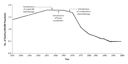
Although an elevated carboxyhemoglobin level is a diagnostic sine qua non of poisoning, it does not predict the severity of clinical signs and symptoms, particularly those affecting the brain. This poor correlation between carboxyhemoglobin levels and neurologic presentation, which has long been recognized, is related to unmeasured tissue uptake of carbon monoxide, which increases during hypoxia because of competition between carbon monoxide and oxygen at the oxygen-binding sites on hemoproteins (see Figure). After cellular uptake of carbon monoxide, nonhypoxic mechanisms, including reoxygenation injury, contribute to pathogenesis.
|
The most common signs and symptoms of carbon monoxide poisoning are nonspecific and include headache, dizziness, and confusion. A high index of suspicion is needed to make the diagnosis, particularly when the means of exposure is not evident. The diagnosis is confirmed by measurement of blood carboxyhemoglobin. Indeed, it has been estimated that more than 5 percent of patients in emergency departments who present with influenza-like illnesses during the winter have occult carbon monoxide poisoning. The normal carboxyhemoglobin level is 1 to 3 percent, a result of endogenous carbon monoxide production by heme catabolism and low-level environmental carbon monoxide exposure. Cigarette smokers increase their carboxyhemoglobin level by an average of 5 percent per pack smoked per day, and otherwise healthy smokers tolerate carboxyhemoglobin levels of 10 percent without having symptoms. Overt signs of toxic effects usually appear at carboxyhemoglobin levels of 15 to 20 percent, and a level of 25 percent is an index of severe poisoning, which may lead to sudden loss of consciousness.
Serious consequences occur in half of victims of severe carbon monoxide poisoning and fall into two major categories: acute cardiac or neurologic injuries and late effects. A delayed neurologic syndrome, typified by memory loss and other, sometimes subtle, cognitive deficits occurs in approximately 15 percent of severely poisoned patients after an interval of 2 to 28 days. Age and loss of consciousness have been identified as independent risk factors. The delayed neurologic syndrome naturally tends to improve gradually, and many patients have normal functional status a year after poisoning, but all require careful follow-up for residual neuropsychological effects.
The cornerstone of treatment for carbon monoxide poisoning is supplemental oxygen, which hastens the dissociation of carbon monoxide from hemoproteins in direct relation to the partial pressure of oxygen. Hyperbaric oxygen at a pressure of 2.5 to 3.0 atmospheres absolute, with which an arterial partial pressure of oxygen above 1800 mm Hg can be achieved, greatly facilitates carboxyhemoglobin dissociation as compared with normobaric oxygen at sea level. In experimentally induced carbon monoxide poisoning, hyperbaric oxygen also benefits the brain more than normobaric oxygen does, by improving energy metabolism, preventing lipid peroxidation, and decreasing neutrophil adherence.
Whether to use hyperbaric oxygen clinically and, if so, when to use it are matters that have been debated since it emerged as a treatment for carbon monoxide poisoning in 1960. Practice guidelines were developed on the basis of clinical experience and inferences of efficacy in uncontrolled studies. Results of past controlled trials comparing hyperbaric-oxygen and normobaric-oxygen therapy have been inconclusive because of methodologic difficulties. However, in this issue of the Journal, Weaver et al. (pages 1057�1067) clearly demonstrate, in a carefully designed, double-blind, randomized trial involving 152 patients, that hyperbaric-oxygen therapy at 3 atmospheres absolute is superior to normobaric-oxygen therapy in reducing the incidence of cognitive dysfunction at 6 weeks and 12 months after acute carbon monoxide poisoning.
These findings strengthen the rationale for hyperbaric-oxygen therapy in patients with acute carbon monoxide poisoning, but important clinical issues remain. First, we need better predictive tests or criteria for determining the risk of delayed and permanent effects of carbon monoxide poisoning. Second, practical questions remain concerning optimal hyperbaric-oxygen regimens � for example, the optimal number of treatments and the maximal delay after which hyperbaric oxygen is no longer useful. Most trials have enrolled patients as soon as possible after poisoning, yet Weaver et al. leave open the question of whether some patients benefit from hyperbaric oxygen after the often-quoted therapeutic window of 6 to 12 hours. A third unresolved issue is that of mild carbon monoxide poisoning: how should patients who do not need hyperbaric-oxygen therapy be treated? Many practitioners recommend six hours of 100 percent normobaric oxygen delivered by face mask, although the efficacy of this treatment has not been validated. Finally, it must be emphasized that neither hyperbaric oxygen nor any other therapy can be expected to prevent cognitive deficits due to cell death sustained during the episode of poisoning. Therefore, prevention remains a vital public health issue.
Claude A. Piantadosi, M.D.
Duke University Medical Center
Durham, NC 27710